
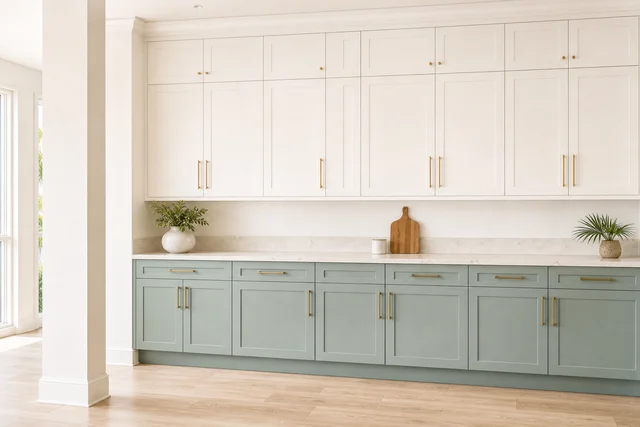
Florida kitchens face challenges that homeowners in other parts of the country rarely consider. In Bonita Springs and throughout Lee and Collier County, high humidity, salt air, and strong air-conditioning cycles all affect how kitchen cabinets perform over time. Choosing the right cabinet material is one of the most important decisions you can make when planning a kitchen upgrade.
At Classic Floors & Countertops, we help homeowners select cabinet materials that not only look great but also stand up to Southwest Florida's demanding climate. Understanding the differences between plywood, MDF, and thermofoil cabinetry will help you make a confident, long-lasting choice.
Why Cabinet Material Matters in Southwest Florida
Kitchen cabinets in Florida must handle constant moisture in the air, temperature fluctuations, and daily use from cooking, cleaning, and entertaining. In coastal areas like Bonita Springs, inferior cabinet materials can swell, warp, or delaminate over time if they are not designed for humidity.
The right cabinet construction improves:
- Long-term durability
- Resistance to moisture-related damage
- Finish longevity
- Overall resale value
Material selection matters just as much as cabinet style or color when designing a Florida kitchen.
Plywood Cabinets: The Most Reliable Choice for Humid Climates
Plywood is widely considered the best-performing cabinet box material for humid environments. Constructed from multiple layers of wood veneer, plywood offers strength and dimensional stability that performs well in Florida homes.
Advantages of plywood cabinets
- Excellent resistance to expansion and contraction
- Strong screw-holding ability for hinges and hardware
- Durable construction for full-time and seasonal homes
- Performs well with painted or stained finishes
Plywood cabinet boxes are especially popular in Bonita Springs kitchens where homeowners want long-term performance with minimal risk of moisture-related issues.
Things to consider
- Higher cost compared to MDF
- Quality varies by manufacturer
For homeowners planning to live in their home long-term or who want maximum durability, plywood is often the safest investment.
MDF Cabinets: Smooth Finish, Moderate Moisture Resistance
Medium-density fiberboard, or MDF, is a commonly used cabinet material, particularly for painted cabinet doors and panels. MDF is engineered from wood fibers and resin, creating a smooth, uniform surface.
Benefits of MDF cabinets
- Ideal for painted finishes
- Smooth surface with no wood grain telegraphing
- More affordable than plywood
- Stable in climate-controlled environments
MDF performs well in many Bonita Springs homes when paired with proper ventilation and consistent air conditioning.
Limitations in humid environments
- Less tolerant of direct moisture exposure
- Can swell if water penetrates unfinished edges
- Not ideal for sink bases or high-moisture zones
MDF is best used when properly sealed and installed in kitchens with good humidity control.
Thermofoil Cabinets: Moisture-Resistant Surface With Caveats
Thermofoil cabinets feature a vinyl layer heat-sealed over an engineered wood core, often MDF. This creates a seamless, non-porous surface that resists moisture on the exterior.
Advantages of thermofoil cabinets
- Smooth, wipe-clean surface
- Resistant to surface moisture and spills
- Consistent appearance with no seams
- Budget-friendly option
Thermofoil cabinets can work well in secondary kitchens, condos, or homes where budget and ease of cleaning are priorities.
Potential drawbacks in Florida kitchens
- Susceptible to peeling if exposed to heat
- Limited repair options if damaged
- Less design flexibility than painted cabinetry
Proper installation away from high-heat appliances is essential for long-term performance.
Comparing Cabinet Materials for Florida Homes
When evaluating plywood, MDF, and thermofoil cabinets for Bonita Springs kitchens, performance in humidity is the deciding factor.
- Plywood is best for: Primary residences · Homes near the coast · Long-term durability and resale value
- MDF is best for: Painted cabinets · Climate-controlled kitchens · Budget-conscious remodels with proper sealing
- Thermofoil is best for: Condos and seasonal homes · Easy-clean surfaces · Lower-maintenance needs
Each material can perform well when used in the right application and installed correctly.
Finish Quality and Moisture Protection Matter
Regardless of the cabinet material you choose, finishes play a critical role in protecting cabinets from humidity.
Best practices include:
- Fully sealed cabinet interiors and edges
- High-quality painted or laminated finishes
- Moisture-resistant adhesives and hardware
- Proper ventilation during cooking
Cabinet material alone is not enough—professional installation ensures cabinets are protected from Florida's environment.
Matching Cabinet Materials to Your Lifestyle
Choosing the right cabinet material should align with how you use your kitchen.
Consider:
- Full-time vs seasonal living
- Cooking frequency and ventilation
- Proximity to water sources
- Long-term ownership plans
Many homeowners find it helpful to explore cabinet options during a shop-at-home consultation, where materials can be reviewed in their actual kitchen environment.
Cabinet Materials and Resale Value in Bonita Springs
In Southwest Florida real estate, buyers expect kitchens that feel solid, clean, and well-maintained. Cabinet materials that resist humidity help preserve the look and function of the kitchen over time.
Plywood cabinet boxes tend to deliver the strongest resale appeal, followed by well-finished MDF cabinetry. Thermofoil can still add value when installed thoughtfully and maintained properly.
Get Expert Cabinet Guidance for Your Florida Kitchen
Choosing kitchen cabinets in Florida requires more than selecting a style you like—it requires understanding how materials perform in a humid, coastal climate. Classic Floors & Countertops provides expert cabinet design and installation services for homeowners throughout Bonita Springs, Lee County, and Collier County.
If you're planning a kitchen remodel or cabinet upgrade, request a free estimate or contact Classic Floors & Countertops to schedule your in-home design consultation. Our team will help you select cabinet materials that look beautiful and perform reliably in Southwest Florida homes.
How to Pressure-Test Cabinet Construction in Person
Reading about plywood versus MDF is a start; your hands settle it faster. When you're standing in front of a cabinet — in our showroom or anyone's — run this quick field test:
- Open a base cabinet and look at the box edges. Sealed, finished edges — including the ones you have to crane to see — are the tell of a line built for humidity; raw, fuzzy edges are where Florida moisture gets in.
- Pull a drawer all the way out and press down gently on its open front. A quality drawer box barely flexes; a bargain one bows and will sag under real dishes within a few summers.
- Swing a door and let it close on its soft-close hinge. Listen for a single, damped settle — rattles and bounces mean hardware that daily use will loosen.
- Check the back panel. A solid, fastened back keeps the box square for decades; a stapled hardboard back is the first thing to let go in a humid garage-adjacent kitchen.
- Ask what the sink base is made of. That one cabinet lives the wettest life in the house — it's where materials honesty shows first.
Five minutes of this tells you more than any brochure — and it's exactly the comparison our cabinet showroom is set up for, with the door styles and construction tiers side by side so the differences are something you feel rather than take on faith.
Questions Worth Asking Before You Order
Whatever cabinets you choose and wherever you buy them, get clear answers to these before signing: What is the box material, and are the interiors and edges fully sealed? What is the door material and finish process, and how does the warranty treat humidity-related failures? What are the real lead times, and what happens if a damaged cabinet arrives? Who installs — employees or subcontractors — and who fixes what installation reveals?
A supplier comfortable with those questions is a supplier whose cabinets will probably survive Florida. A supplier who changes the subject has answered them too.