Done properly
What separates a lanai floor that lasts from one that lifts.
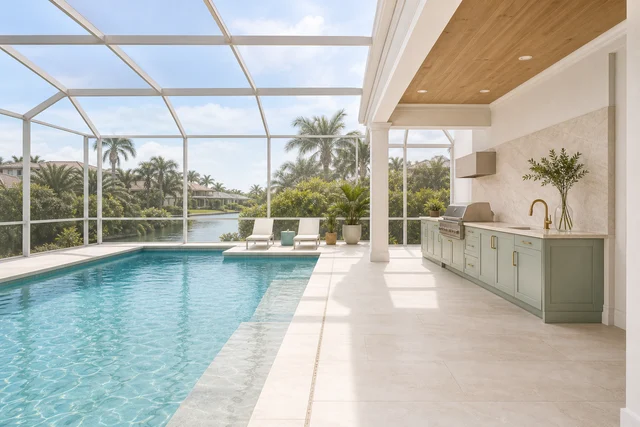
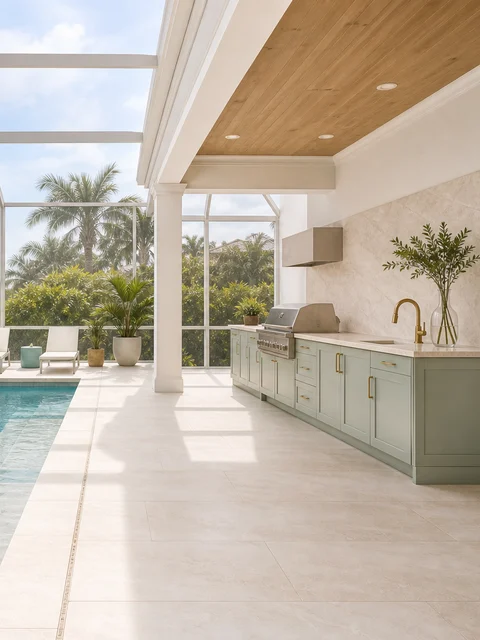
Outdoor tile work punishes shortcuts. A lanai slab moves with heat and moisture in ways an indoor floor never does, and the installation has to plan for it: the slab checked and prepped, drainage slope preserved so storms run off instead of pooling, movement joints placed where the assembly needs to breathe, and exterior-rated setting materials throughout. None of it shows at the reveal — all of it decides how the floor looks years down the line.
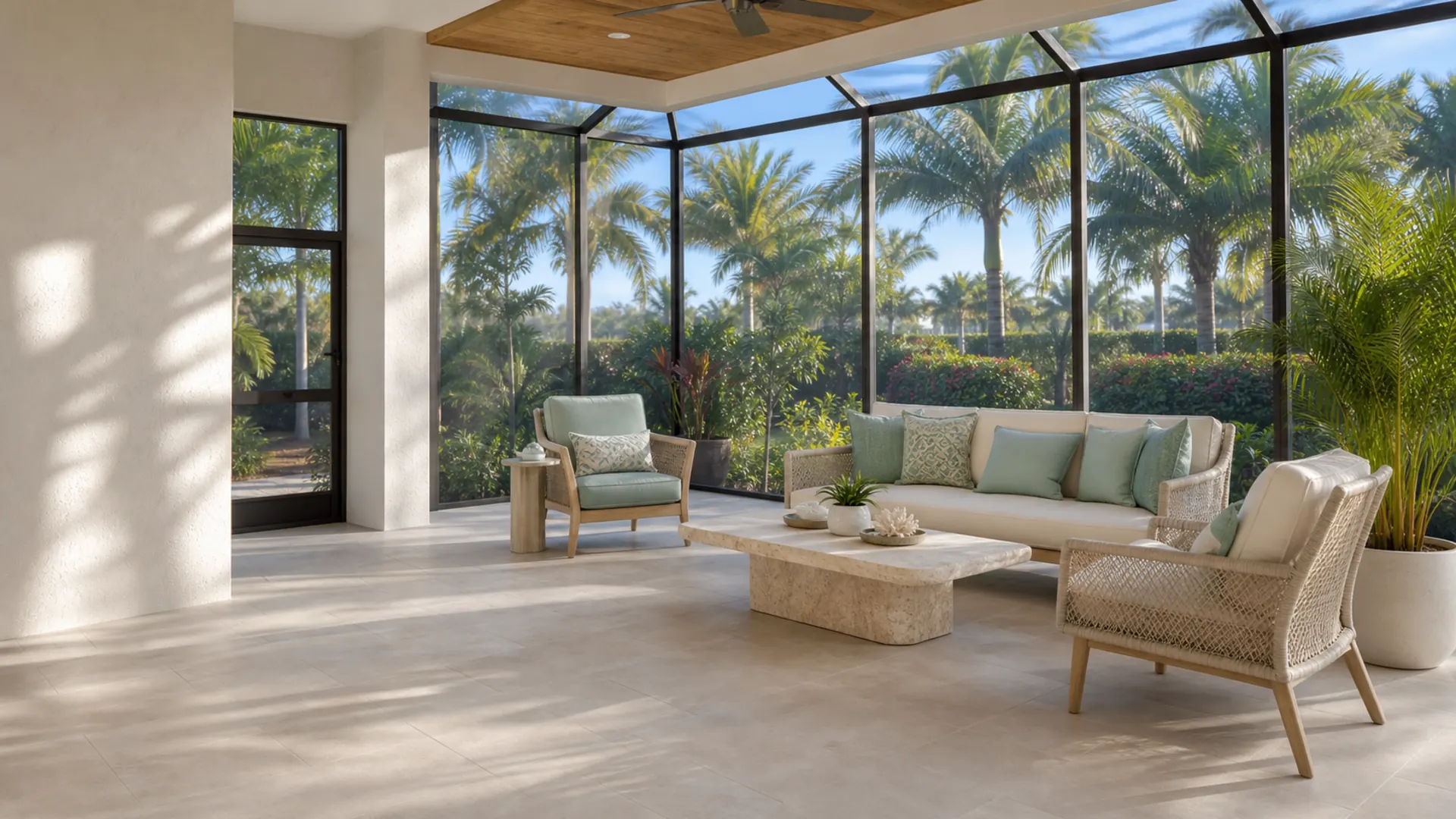
The other quiet decision is the threshold. The best Southwest Florida floor plans blur the slider line — tile or plank chosen so the living room flows onto the lanai and the whole back of the house reads as one generous room. Sometimes that's the same porcelain inside and out; sometimes it's a paired tone across two materials rated for their own exposure. We plan the transition on purpose, because it's the first thing your eye reads every morning.
Screened or open matters too: an unscreened lanai takes direct rain and full UV, which narrows the palette toward the densest porcelain and pavers; a screened one opens the choices. Bring photos of yours and the honest answer takes about five minutes.
Living with the floor is the easy part — a seasonal rinse, furniture feet that won't scratch, and for natural stone a sealing habit measured in years, not months. We'll send you home with the one-paragraph care story for whatever you choose, because a lanai should be the room you relax in, not the one you maintain. And if the floor is part of a bigger outdoor plan — new screening, a pool deck refresh, furniture worth the setting — sequencing the floor first keeps every later trade from working on top of your finished surface.